
Gang Wars : Street Crime
Skyloft Yazılım Bilişim ve Anonim ŞirketiAction
4.6197.00 Reviews
- Version
- 0.6.10
- Installs
- 500.00K
- Age Rating
- Teen
Screenshots
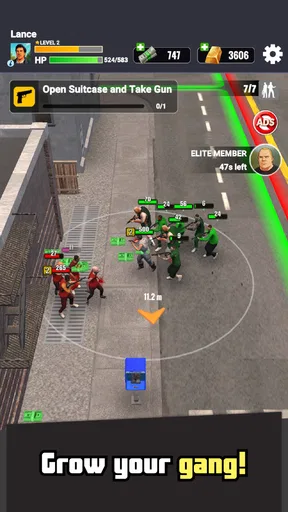
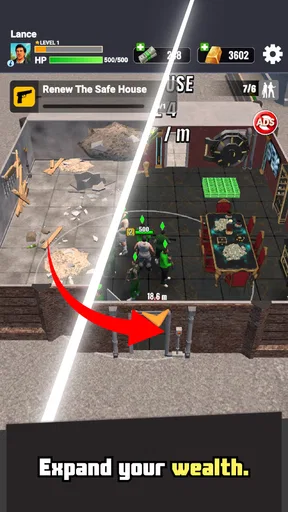
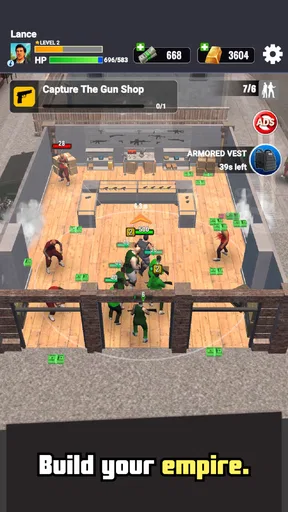
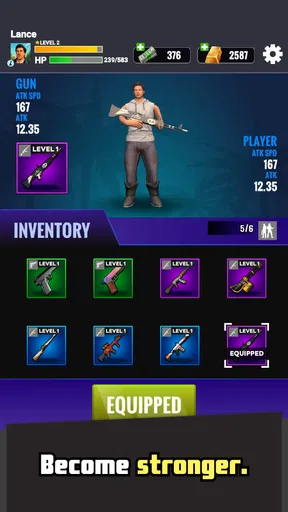
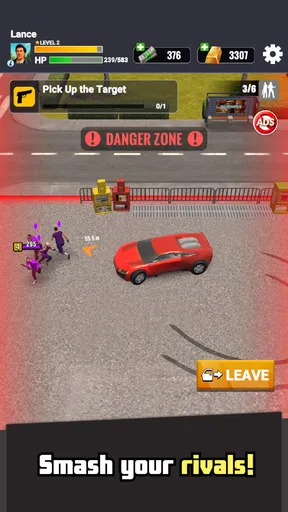
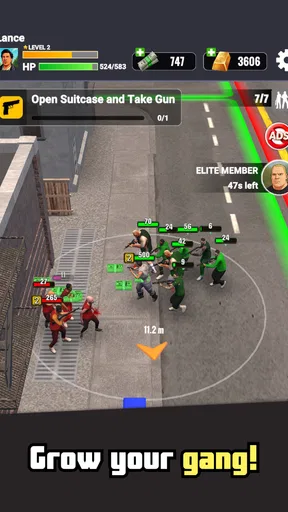
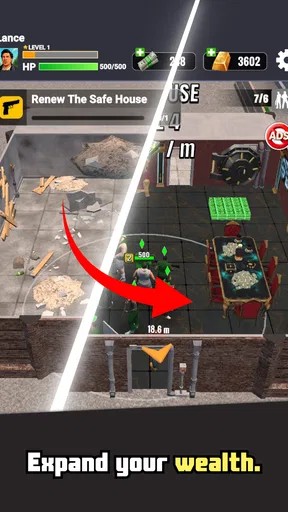
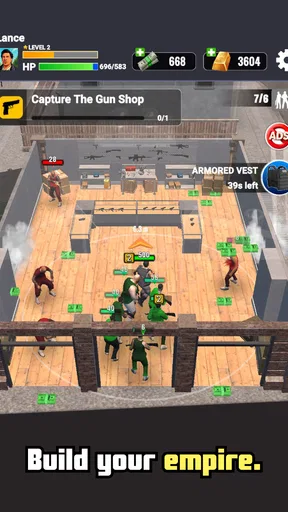
Our Review of Gang Wars : Street Crime
 Analysis by Appyee
I approached Gang Wars: Street Crime as a quick decision rather than assuming that every action game needs the same kind of player. Its central promise is easy to understand: assemble a squad, take control of zones, and try to outplay the opposing side. What matters in practice is whether that structure matches the way you like to play. If you enjoy short tactical choices, territory pressure, and the feeling that a team works better when its roles complement one another, this game has a clear appeal. If you prefer a solo campaign, a deep narrative, or a purely reflex-based shooter, you may find its focus less satisfying.
This is a free action game from Skyloft Yazılım Bilişim ve Anonim Şirketi, with a Teen content rating. It has reached more than 500,000 installs and holds an average rating of 4.6 from roughly 12,000 ratings, which suggests that its compact battlefield concept has found a receptive audience. I would not treat those figures as a substitute for personal taste, though. The important question is how much you value squad decisions and zone control compared with the familiar alternatives in the action category.
What to consider before choosing it
My first decision criterion is the kind of attention a game demands. Gang Wars: Street Crime is better suited to someone who wants to make repeated choices during a match than to someone looking for a passive experience. Capturing a zone is not just a matter of moving toward a marked area; the useful decision is when to commit, when to protect progress, and when to avoid stretching the squad too thin. That gives the action a strategic layer without making the game feel like a traditional turn-based tactics title.
The second criterion is whether you enjoy team-based pressure. The squad is the heart of the experience, so the game makes more sense when you think about the group as a unit instead of treating every encounter as a personal duel. A strong player can still make poor decisions if the team is divided or if too much attention is spent on one area while another is left vulnerable. I found that this creates a more interesting rhythm than simply chasing opponents across a map.
Another useful question is how much friction you accept in a free-to-play game. The title is free to download, but its in-app purchases range from $1.99 to $49.99 per item. That does not automatically make the game unfair, yet it does mean that anyone sensitive to optional spending should pay attention to the purchase flow and decide on a personal limit before getting deeply invested. I prefer making that decision early, because competitive excitement can make an attractive upgrade feel more necessary than it really is.
Device compatibility is relatively approachable: the game supports Android 7.0 and later. That makes it a practical option for people who are not using a recent phone, although compatibility alone does not guarantee that every older device will feel equally comfortable during busy moments. For a game built around tracking several zones and squad movements, a responsive screen matters more than a long feature list. I would test the controls before committing time or money.
The battlefield loop rewards deliberate movement
The strongest part of the design is the tension between expanding and holding. Capturing territory feels useful only when you can turn that position into continued pressure. Rushing toward every available zone may look productive, but it can leave the squad poorly placed for the next exchange. I had more success treating each capture as a temporary advantage: secure it, read the situation, and decide whether the next move should be aggressive or defensive.
This is one of the game’s less obvious strengths. The store summary can make the experience sound like a straightforward domination contest, but the better way to approach it is as a series of small risk calculations. A zone is valuable because of what it lets you do next, not merely because it changes ownership. That mindset helps reduce wasteful movement and makes defeats easier to understand.
I also recommend resisting the urge to keep every squad member moving at all times. When several objectives compete for attention, a controlled pause can be more valuable than another attack. Keeping part of the team near a useful position gives you a fallback and makes the opposing side work harder for a clean breakthrough. This is especially helpful for players who normally play action games by reacting moment to moment rather than planning two moves ahead.
Another practical habit is to use the edge of a confrontation as information. You do not need to enter every fight immediately. Watching where pressure is building can reveal whether a zone is genuinely worth contesting or whether it is being used to distract you. That small delay is not exciting in the same way as a direct charge, but it often produces a better decision. The game is at its most enjoyable when it rewards that kind of restraint.
Why it stands out among action alternatives
Compared with a conventional arcade action game, this one gives territory a lasting role in the match. In a purely reflex-driven alternative, success may depend mostly on aim, timing, or rapid movement. Here, those skills are still useful, but they are joined by positioning and prioritization. I would choose Gang Wars: Street Crime over a basic score-chasing action title when I want my decisions about space to matter as much as my reactions.
It also occupies a different place from a story-focused crime game. The street-crime setting may attract players who like that atmosphere, but the appeal here is the contest itself rather than a long character journey. If you want dialogue, missions built around narrative twists, or a carefully paced single-player campaign, another category of game will probably serve you better. This is a battlefield game first, and its value comes from repeated tactical situations.
Against a traditional strategy game, the advantage is accessibility. You do not need to spend an evening studying a complex ruleset before understanding the basic objective. The drawback is that players seeking a large management system or highly detailed long-term planning may find the focus narrower. I see it as a middle ground: more thoughtful than a simple brawler, but more immediate than a full strategy simulation.
That middle ground is where the game wins its best argument. It can fit a short break, yet the zone-control structure gives a reason to improve beyond simply finishing a round. I would recommend it to someone who wants action with a tactical edge, not to someone who wants either extreme of the market.
Everyday situations where the format works
Imagine having a short wait before an appointment. A game built around clear objectives is easier to start than a large open-world adventure, because you can focus on the immediate contest rather than remembering a complicated story. Gang Wars: Street Crime suits that moment if you enjoy making quick decisions and can stop without feeling compelled to chase one more improvement.
It can also work as a shared conversation starter among friends who like discussing tactics. Even without turning it into a formal competition, the squad-and-zone structure gives you something concrete to compare: whether someone attacked too early, protected the wrong area, or failed to recognize a distraction. That makes the game more discussable than an action title where the only explanation for a loss is that the other player reacted faster.
On the other hand, I would avoid opening it when I want a calm, low-pressure session. Territory contests naturally create urgency, and players who dislike losing progress or making rapid choices may find the experience tiring. It is also not my first pick for a long flight or commute if I am looking for a self-contained narrative that does not depend on repeated competitive tension.
Where another type of game may fit better
Players who want a strong solo identity should look toward story-led action games instead. Those games usually provide a clearer sense of character development and progression through a campaign. Gang Wars: Street Crime is a better match when the immediate question is “which area should I contest now?” rather than “what happens to the protagonist next?” That distinction is important because the setting alone should not create expectations of a crime drama.
Players who prefer direct control of one highly customized character may also be happier with an action RPG or a conventional shooter. The squad perspective changes the satisfaction of play: you are not only trying to perform well personally, but also trying to make the group’s movement and objective choices work together. If that sounds like extra mental overhead rather than added depth, an individual-combat alternative will feel cleaner.
There is a similar trade-off for fans of deep strategy. A dedicated strategy game may offer better tools for planning, resource management, and long campaigns. Gang Wars: Street Crime is more approachable because its battlefield idea is immediate, but that simplicity can become a limitation for players who want a large system to master. I would choose it for accessible tactical action, not as a replacement for a full strategy experience.
Finally, players who dislike optional purchases should be especially deliberate. The free entry point is useful, but the presence of items priced between $1.99 and $49.99 means the commercial layer is part of the decision. I would not install it with the assumption that spending is required, but I would also not ignore the possibility that purchase prompts could affect how comfortable the experience feels. A strict budget and a willingness to judge progress without buying are sensible safeguards.
How to switch into the game without wasting time
The cost of switching is mostly mental rather than financial. If you are coming from a fast shooter, you may initially overvalue direct confrontations and undervalue positioning. Give yourself time to learn the relationship between a captured zone and the next decision. Instead of measuring your first sessions only by wins, ask whether you understood why a move succeeded or failed. That approach turns early mistakes into useful information.
If you are moving from a strategy game, the adjustment goes in the opposite direction. You may be tempted to plan too much before acting, but the action format rewards timely decisions. A good plan that arrives late is often worse than a simple plan executed while the situation is still favorable. I found that the most effective transition was to keep one priority in mind, then revise it as the battlefield changed.
There is also a practical switching cost for players who usually play alone. Squad-based action asks you to distribute attention, which can feel less immediately personal than controlling one hero. The benefit is that a mistake does not have to be solved through reflex alone; you can sometimes recover by changing the team’s position or abandoning an unhelpful objective. If you enjoy learning from patterns, that recovery potential is rewarding.
Before making any purchase, I would spend enough time deciding whether the basic loop itself is enjoyable. No upgrade can fix a mismatch between your preferences and zone-control action. If the free experience already makes you think, react, and try a different approach after a loss, then optional spending becomes a personal choice rather than a way to search for enjoyment.
Who should download it
I think this game is a strong candidate for players who want an accessible action title with more decision-making than a standard run-and-gun format. It is particularly suitable if you like watching a situation develop, choosing which territory matters most, and improving through better timing rather than relying only on faster reactions. The free price makes it easy to test that fit, while the Teen rating gives families and younger players a clear age signal to consider.
I would also recommend it to action fans who enjoy a competitive atmosphere but do not want a complicated management game. The squad concept adds enough structure to make each encounter feel purposeful, while the zone objective keeps the focus understandable. The developer, Skyloft Yazılım Bilişim ve Anonim Şirketi, has positioned the game around that direct combination of team building and territorial pressure rather than burying the main idea under unnecessary complexity.
My recommendation is more cautious for players who need a story, dislike recurring objective-based matches, or want complete certainty that they will never face purchase pressure. Those are not minor preferences; they affect the core experience. A narrative action game, a solo shooter, or a deeper strategy title may be a better use of your time depending on what you want from the category.
My final recommendation after weighing the trade-offs
Gang Wars: Street Crime is worth trying if the idea of coordinating a squad while fighting for territory sounds more appealing than simply defeating opponents one by one. Its best quality is the way a straightforward objective can produce meaningful choices about timing, positioning, and commitment. The game feels most rewarding when you stop treating every available zone as an invitation and start asking which capture actually improves your next move.
The current version is 0.6.10, so I would approach it as a game that may continue to develop rather than as a finished replacement for every action subgenre. That makes the free entry point especially useful: try the core loop, check how comfortable the controls feel on your device, and decide whether the tactical layer keeps you interested. I would avoid spending until you know that the basic match flow suits you.
My clear recommendation is to download it for short, decision-heavy action sessions, especially if you enjoy squad coordination and territorial contests. I would skip it in favor of a story-driven or deeply strategic alternative if those are your priorities. For the right player, the key attraction is not the street-crime theme alone, but the constant choice between pushing forward and protecting what you already control.
Verdict
Strengths of Gang Wars : Street Crime
- Simple controls make street fights easy to learn.
- Short missions suit quick gaming sessions.
- Urban crime setting gives the game a gritty atmosphere.
- Character upgrades add a sense of progression.
- Offline play may be convenient when no connection is available.
Limitations of Gang Wars : Street Crime
- Repetitive missions can reduce long-term variety.
- Progress may feel slow without frequent upgrades.
- Combat lacks depth compared with more advanced action games.
- Mature themes and violence may not suit younger players.
- Ads or in-app purchases may interrupt the gameplay experience.
Other Releases by Skyloft Yazılım Bilişim ve Anonim Şirketi
View All
Road Cycling: World Tour Race
Simulation4.1
Similar Picks in This Category
View All
Temple Run 2: Endless Escape
Imangi Studios4.1

PUBG MOBILE
Level Infinite4.3

Free Fire: 9th Anniversary
GARENA INTERNATIONAL I4.4

Talking Tom: Hero Dash Run
Outfit7 Limited4.3

slither.io
Lowtech Studios3.9

Sniper 3D:Gun Shooting Games
Wildlife Studios4.6
Frequently Asked Questions
What is Gang Wars: Street Crime about?
Gang Wars: Street Crime is an action-focused mobile game centered on urban gang conflicts, street missions, rival groups, and territory control. Players typically build their criminal organization, complete combat-driven objectives, collect resources, and improve characters or equipment. Its appeal comes from combining quick battles with progression and strategy, although the exact experience can vary depending on updates and the device used.
Can Gang Wars: Street Crime be played offline?
Offline availability may be limited. Some parts of the game, such as menus, saved progress, or certain missions, could work without a connection, but online features, advertisements, cloud saving, events, purchases, and progress synchronization usually require internet access. Before downloading, players should check the store listing and test the game after installation, especially if they expect to play while traveling or with unreliable mobile data.
Is Gang Wars: Street Crime free to download and play?
Gang Wars: Street Crime may be available as a free download, but free access does not always mean that every feature is completely free. Games in this category commonly include optional in-app purchases, rewarded advertisements, premium currency, upgrades, or time-saving items. You can usually progress without spending money, although patience may be required. Parents should also review purchase restrictions before allowing children to play.
Is Gang Wars: Street Crime suitable for children?
Because the game focuses on gangs, street crime, fighting, weapons, and criminal themes, it may not be appropriate for younger children. The correct age recommendation depends on the platform rating and the specific content included in the current version. Parents should review the official rating, violence level, advertising, chat or social features, and in-app purchases before installation rather than relying only on the game’s title.
What devices are required to run Gang Wars: Street Crime smoothly?
The game’s performance depends on its current version, graphics settings, and the capabilities of your Android or iOS device. A reasonably recent phone or tablet with enough free storage, updated system software, and stable memory should provide a better experience. Older devices may experience longer loading times, reduced frame rates, overheating, or crashes. Check the official store requirements and keep additional space available for updates.
Play our best games!


